Geoffrey Drake-Brockman, Artist
 

Floribots
2005, 800 x 400 x 120 cm, Robotics, Origami, Stainless Steel, Auto Lacquer, Hardboard
Floribots
Floribot

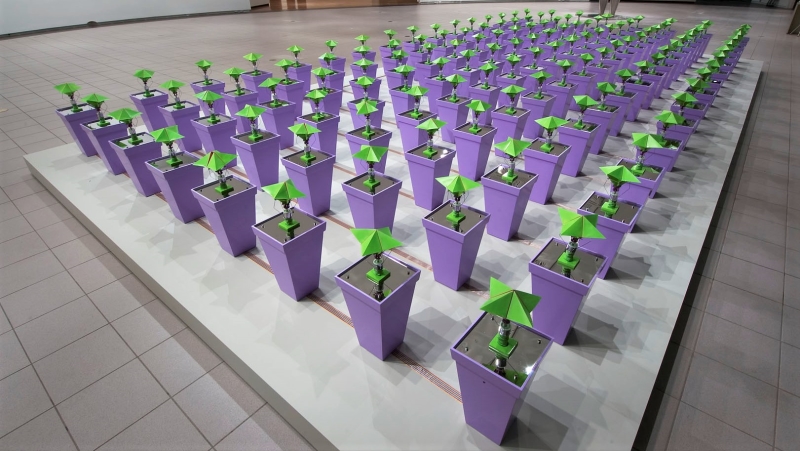
Floribots consists of 128 computer-controlled robot origami flowers, arranged in an 8-by-16 grid and spread over 35 square metres of floor space. Each robot flower is able to extend telescopically from a rest condition to grow one metre vertically, then suddenly invert its origami “flower” into an open “bloom” state. The unit can also re-contract back down into its latent condition and refold its origami bloom back into a “bud”. Floribots acts as an interactive collective organism with ‘hive mind” characteristics. It is capable of sensing audience movement and of adapting its behaviours accordingly. It is a “field of flowers” that dances in unison, with choreography provided by its embedded microcontroller. The flower matrix can exhibit complex wave propagation behaviours as well as describing responsive surface features and entering periods of chaotic motion. The Floribot mind is able to control transitions between these states and can “learn” as it is runs over time by acclimatising itself to an installation site and developing a particular set of behaviour preferences. Shortlisted National Sculpture Prize, National Gallery of Australia 2005, Winner Peoples Choice Award, National Sculpture Prize. Also exhibited at Perth Institute of Contemporary Art 2007, and Singapore Art Museum 2010.


Counter

2009, 325 x 325 x 120cm, Electronics, Microprocessor, Electromechanical Digits, Acrylic Paint, Hardboard
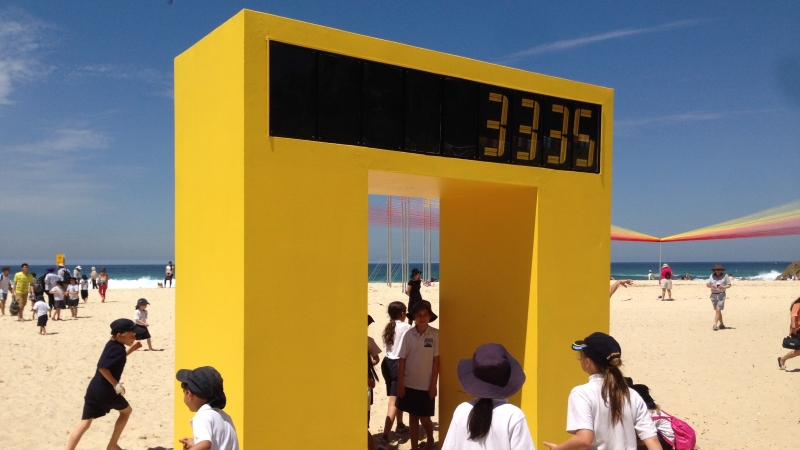
Counter at Cotteloe
Conter in Perth City
Counter was first installed near the entrance to the Perth Underground Train Station in the Central Business District of Perth, Australia. Since then it has counted on the beach at Cottesloe, Western Australia, and will next appear at Aarhus, in Denmark.  The work is a temporary installation originally commissioned by the City of Perth as part of its "Transart" urban art initiative. Counter is an interactive installation that literally counts each pedestrian that walks though its archway. Counter is capable of counting up to one less than a billion, after which it will clock-over and go back to zero. The work is powered by solar energy. The concept for Counter arises from various notions, one of which is the imperative to “be counted” or “make sure you count” that is part of our shared liberal democratic cultural heritage. In addition, the work carries overtones of surveillance and scientific measurement.


Headspace

2010, 150 x 150 x 80cm, Robotics, Electronics, Minicomputer, Digital Face Scan Data, Polished Aluminium
Headspace in Chaos
Headspace with Face
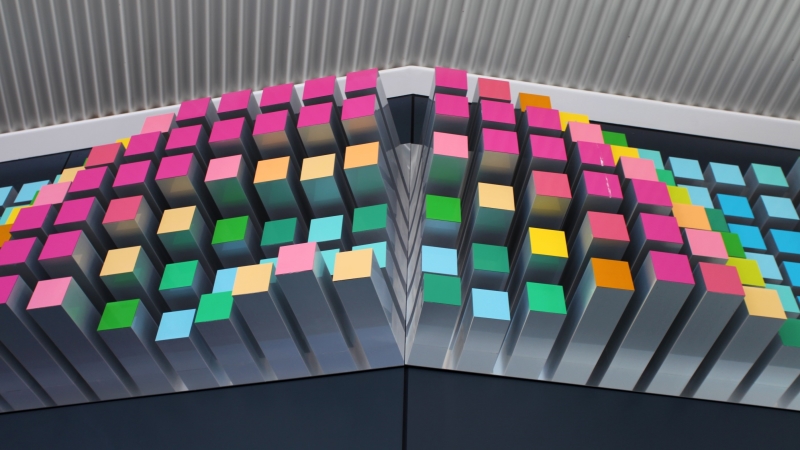
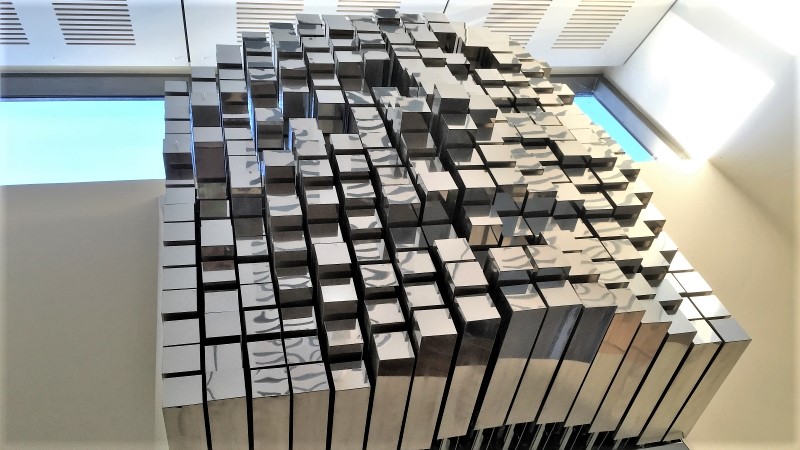
Headspace is a matrix of 256 motorised rods. Each rod is able to extrude some 400mm. It is an interactive kinetic sculpture with four motion detectors able to detect human presence. It is permanently installed at Christ Church Grammar School, in Perth, Western Australia, where it was commission to commemorated the 100th year of the school. The system is loaded with 3D scan data based on the faces of over 700 schoolchildren, the rod matrix is able to assume these face-like forms as well as morph between them and perform geometric transitions.


Optobot

2008, 100 x 230 cm, LEDs, Electronics, Microprocessor, Stainless Steel, Printed Vinyl
Optobot
Optobot Detail
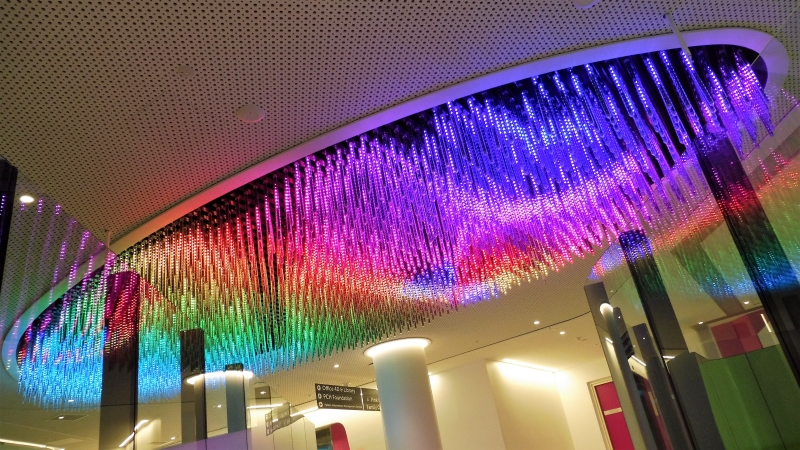
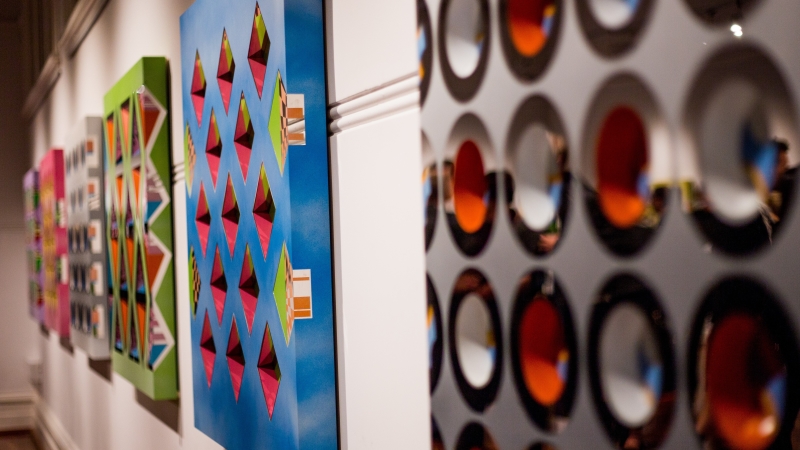
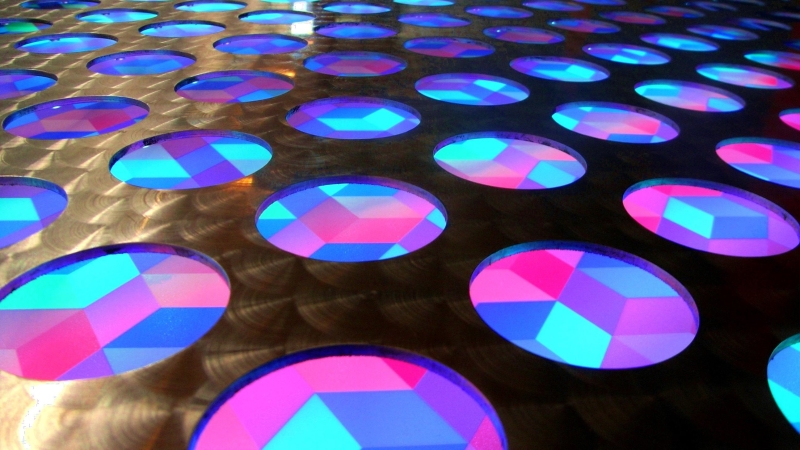
Optobot is an interactive optical wall panel incorporating four motion detectors and some 3,000 RGB LED lights mounted behind two perforated machine-turned stainless steel sheets. The LEDs shine light onto a printed, coloured, tessellated pattern - the idea being to create colour changes by additive and subtractive mixing of colour. The system uses an embedded microcontroller to create multiple, overlapping "waves in colourspace" that propagate across the work then gradually diminish. Optobot uses a DMX network to control 36 channels of colour mixed light. Optobot is permanently installed at Automotive TAFE in Kwinana, Western Australia.


Clockwork Jayne

2009, 200 x 80 x 80 cm, Clockwork Mechanism, Electrical Components, Fibregless, Acrylic Mirror, Auto Lacquer
Clockwork Jayne
Clockwork Jayne Detail
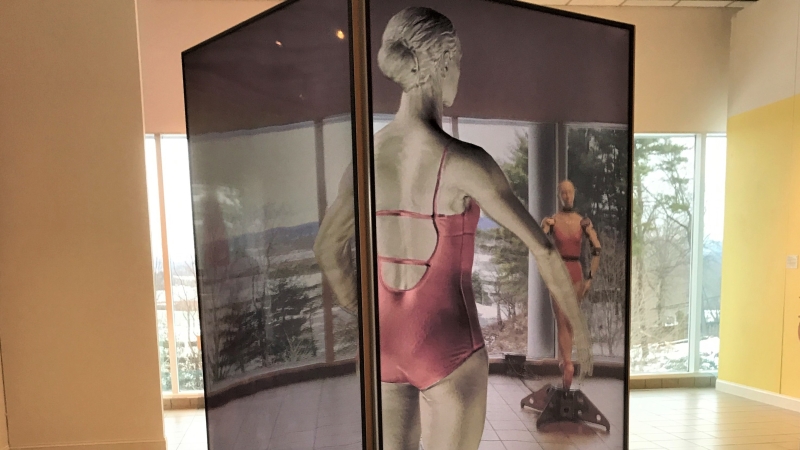
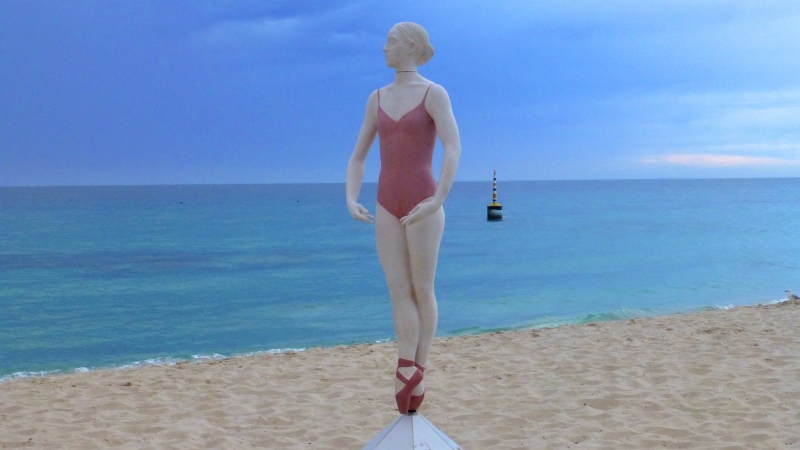
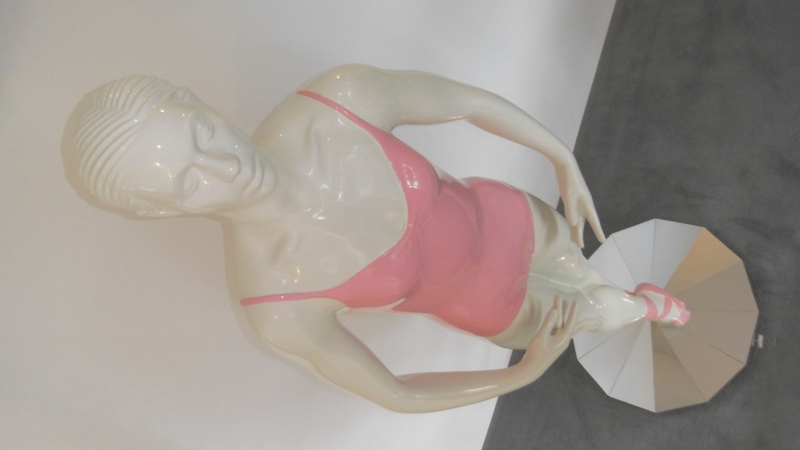
Clockwork Jayne is a life-sized ballerina figure mounted on a faceted mirror base. When its clockwork mechanism is wound up the ballerina pivots slowly and a tune plays quietly until the spring winds down. The work draws on childhood memories of my sisters' little clockwork music boxes, with ballerinas that popped up and rotated in front of a mirror when you open the lid. Clockwork Jayne was exhibited at the Holmes a'Court Gallery in Perth, Western Australia. Clockwork Jayne was produced with assistance from the West Australian Ballet and its principle dancer, Jayne Smeulders.


The Coppelia Project

2011 - Work in progress, Robotics
Coppelia Project Body Cast
Coppelia Project Robot One Work in Progress
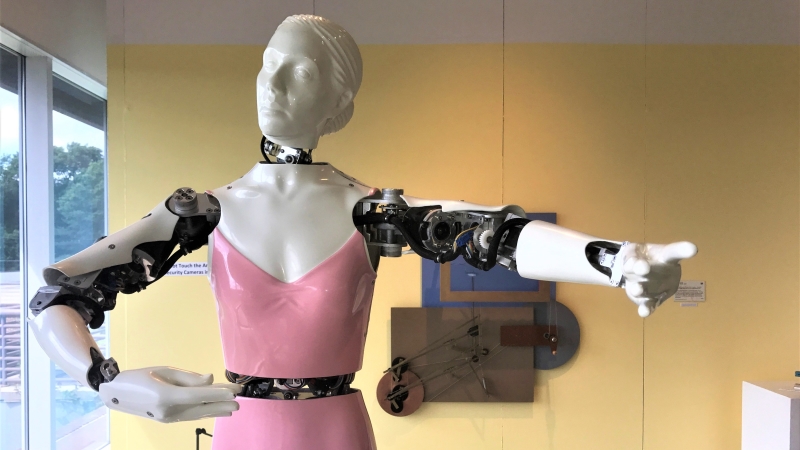
The Coppelia Project will lead to the creation of a troupe of four robot ballerinas that will be able to learn and perform dance movements and interact with an audience.  The Coppelia Project is inspired by the story about a clockwork girl from the ballet "Coppelia" by Delibes, written in 1868. The Coppelia Project is being produced with assistance from the West Australian Ballet and its principle dancer, Jayne Smeulders. Robotics specialist Design Feats has assisted with custom developed motor-control electronics for the project.


Parallax Dancer

2011 - Work in progress, 3D Scans, 3D Animation, Computer Hardware
Parallax Dancer Display Prototype
Virtual Ballerina 3D Scan
The Parallax Dancer project is creating a virtual ballerina installation artwork based on a synthesis of practices in ballet dance and choreography; 3D digital scanning and animation; custom software development; electronic systems integration; and machine vision. The project is being developed with the assistance of 3D scanning bureau headus metamorphosis.


Autobot

2008, Robotics, Electronics, Microprocessor, Aluminium, Automotive Components
Autobot
Autobot Detail
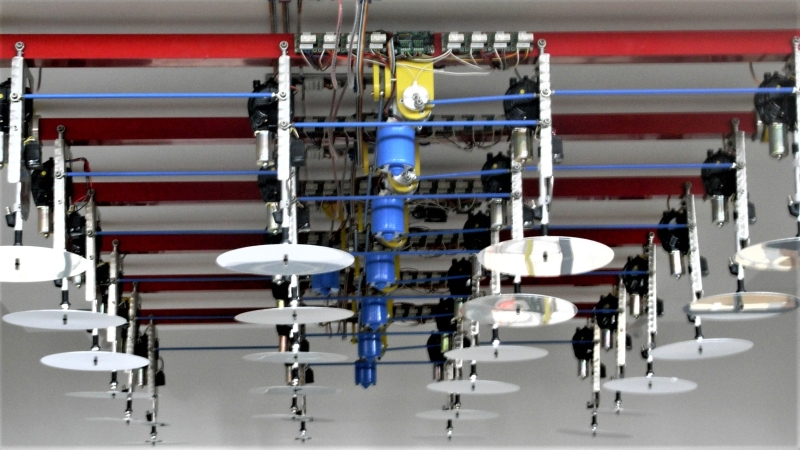
Autobot is an interactive ceiling-mounted robotic artwork incorporating four motion detectors and 31 electric motors.  The system uses an embedded microcontroller to create waves and transformations that propagate across the work then gradually diminish. Autobot is permanently installed at Automotive TAFE in Kwinana, Western Australia.


Anemone

2005, 350 x 200 x 200 cm Robotics, Aluminium, Lycra
Anemone at Cotteloe
Aneomone View 2
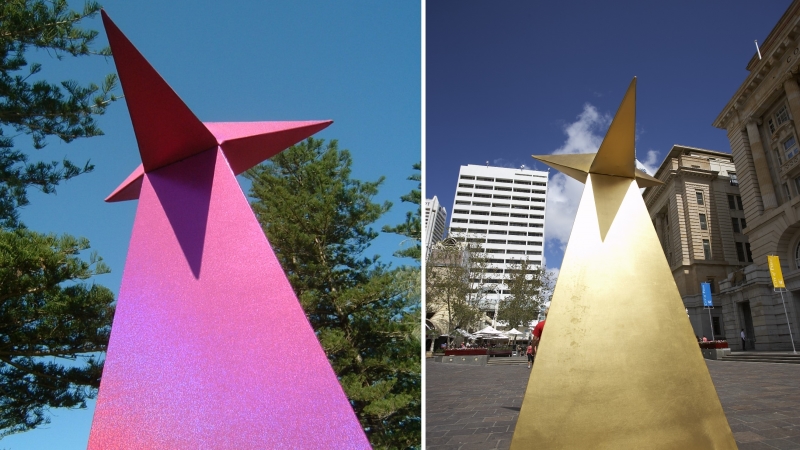
Anemone is an interactive robotic sculpture. Anemone means "wind flower", but anemones are actually a marine animals.


Optic Alley
2008, Dimensions Variable, Lasers, Servo Motors, Microprocessor, Electronics
Image of Optic Alley
Optic Alley Detail

Optic Alley is an interactive laser installation consisting of sixteen pivoting green lasers mounted along a twelve metre stretch of narrow laneway. Optic Alley incorporates four motion detectors and a computer control system so that pedestrians approaching the installation trigger a cascading sequences of laser deflections to create waves that progress down the alleyway until they dissipate. Optic Alley sets up the potential for a dance-like performance to emerge, as pedestrians move and sway in response to the lasers and Optic Alley responds in turn to the movement of pedestrians. Optic Alley is the result of a Research and Development grant from the Perth Institute of Contemporary Art and Cultural Sponsorship from the City of Perth


Essentialiser

2002/2003, Lasers, Video Interactive Installation
Essentialiser Detail
Essentialiser

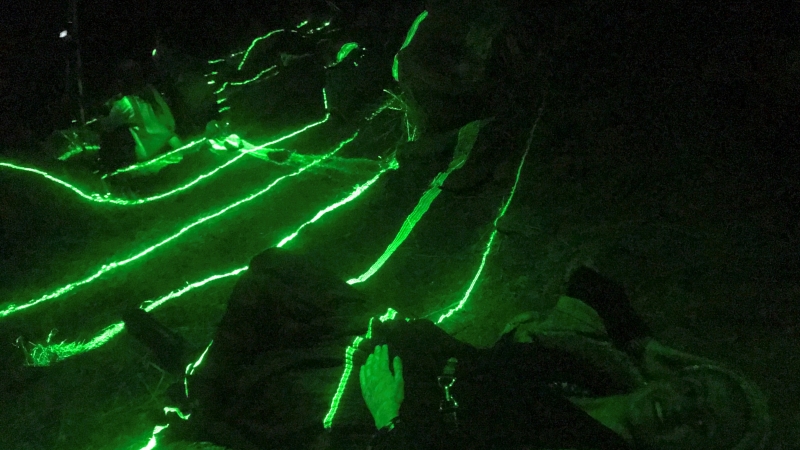
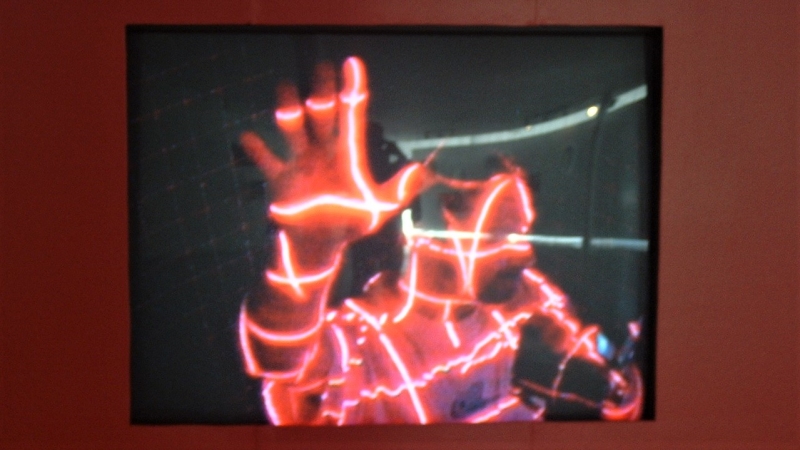
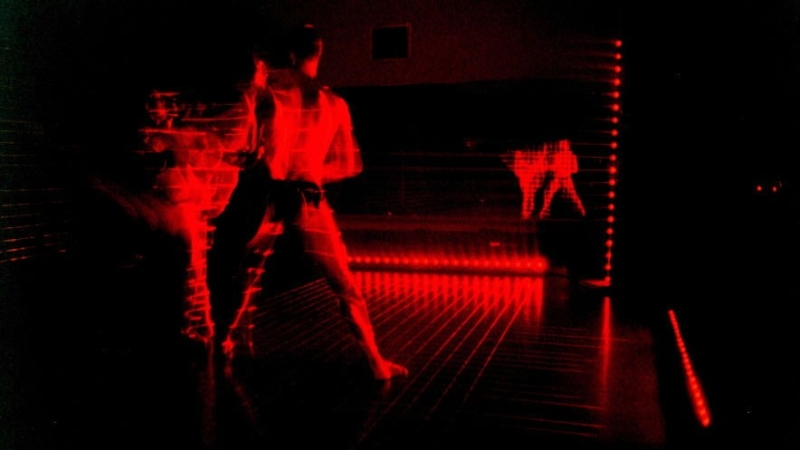
Essentialiser is an interactive appliance incorporating 60 small industrial red lasers, installed along three axial mounts. Each laser produces a fan-beam that creates a perfect plane of red light. The effect is that anything or anyone inside Essentialiser is embedded in a matrix of 6,859 ten-centimetre wide cubes of red laser light inside a two-and-a-half metre cubic enclosure. The enclosure is darkened internally and screened from outside light. Audience participants are able to pass through a door and enter the space where the 60 beams trace lines onto their bodies. The visible effect of the incident beams is picked up via an infra-red video camera and displayed, on a feedback monitor inside the Essentialiser, as well as on a large outside monitor, for the gallery audience to see. Collaboration with Rickie Kuhaupt. Essentialiser has been exhibited at the Perth Institute of Contemporary Art and at Collaborative Concepts Gallery in Beacon, New York USA.


Transfiction

2005, 120m Wide Laser Projection
Image of Transfiction
Transfiction Detail

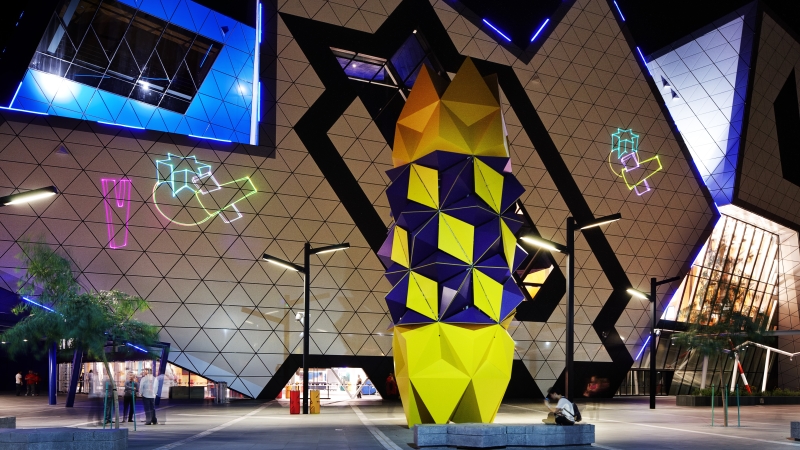
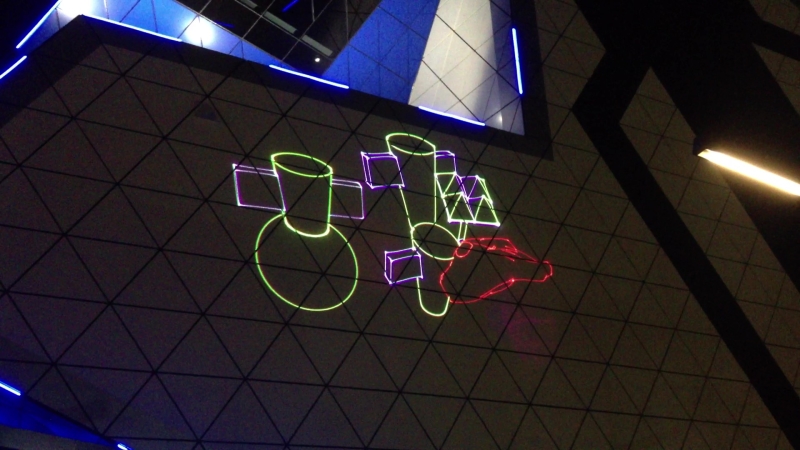
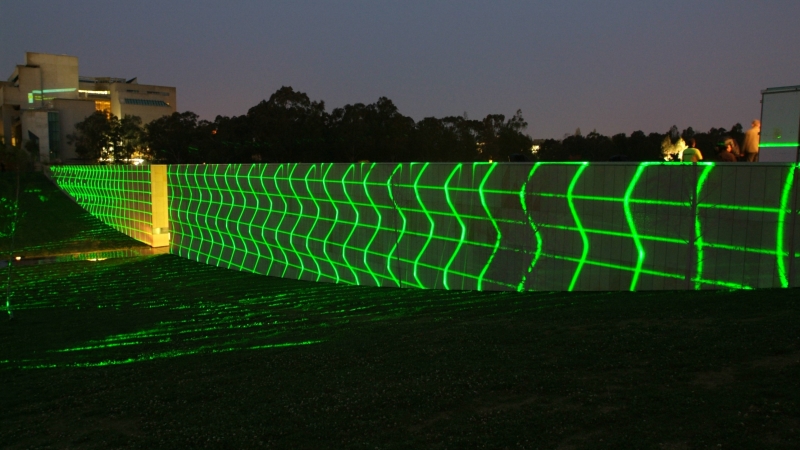
Transfiction uses a laser projection to redefine the surface of a built object - Commonwealth Place, in the Parliamentary Triangle, Canberra. Transfiction’s departure point is a line-matrix or ‘wireframe’ representation of a flat surface. However, rather than projecting only ‘true’ or straight laser vectors onto the built surface, Transfiction uses scanning laser technology to project distorted and altered lines and webs. The work explores fictional geometries,  where the rules of solidity and linearity are temporarily suspended. Located at the symbolic heart of our nation, this work was commissioned by the ACT Government as the entryway to 24:7 Public Art Programme of 2005. 


Bubblesort


2002, 170 x 80 x 50 cm, Aluminium, Copper, Chromium, Auto Lacquer
Bubblesort at Bondi
Bubblesort

Bubblesort is a famous software sorting algorithm. This sculpture actualises the virtual bubblesort construct and credits it with agency and interactive potential. Exhibited Sculpture by the Sea, Bondi and Cottesloe.


LaserWrap

2004, Dimensions Variable, Laser Projection Installation
Laserwrap
Laserwrap Projector

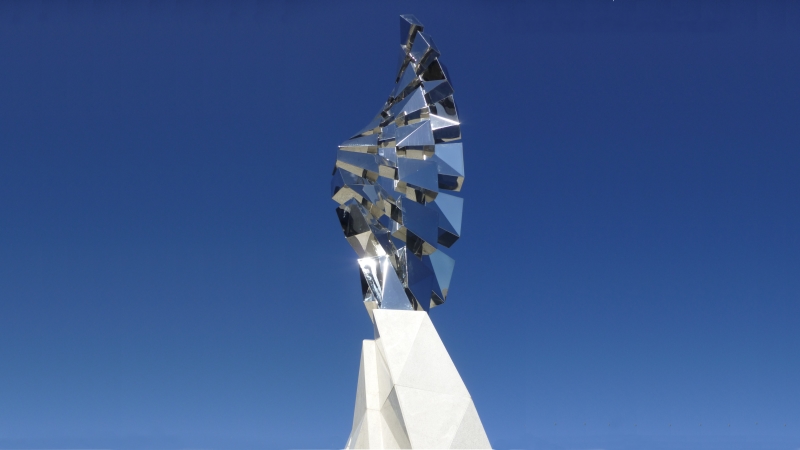
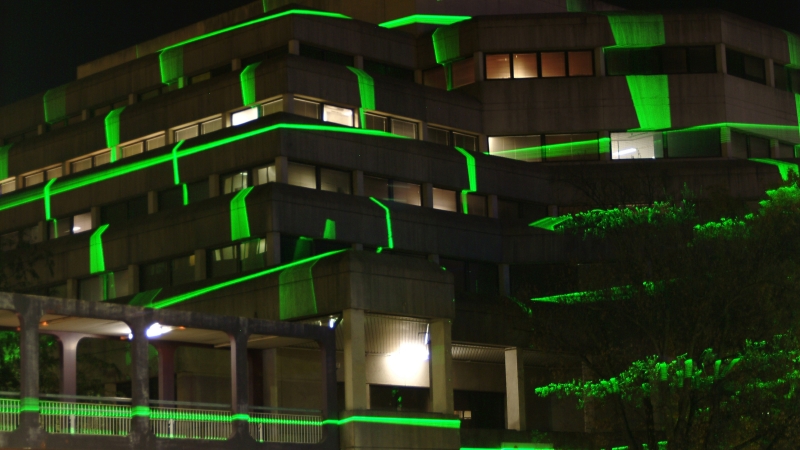
LaserWrap is a permanently installed animated laser sculpture that illuminates the ACT Health Building for three hours each night. Twenty green lasers literally wrap the building in a gently undulating matrix of light cubes. LaserWrap has had a transformational impact on the quality of the built environment in the nightlife precinct at the heart of Canberra. A new and unexpected addition has been made to the solid presence of a 1970s public building - in the evening it comes to life, transformed like the pumpkin before midnight into an otherworld vision. A functioning building is transposed to a plastic, performing, chimera. The artist's vision entailed embedding an existing built object into an active laser sculpture. They wanted to take the classic mathematical system of Cartesian 3-D co-ordinates - consisting of x,y, and z axes - and use it as a metaphor for a virtualising, postindustrial worldview. They wanted to apply this metaphor on a massive scale - the huge step-pyramid presence of the ACT Health Building provided the prefect platform for this experiment. Collaboration with Rickie Kuhaupt. This work was an Exemplar, Year of the Built Environment, 2004.


Torso

2004, 185 x 120 x 40 cm, Stainless Steel, Cast Marble
Torso at Helen Lempriere
Torso

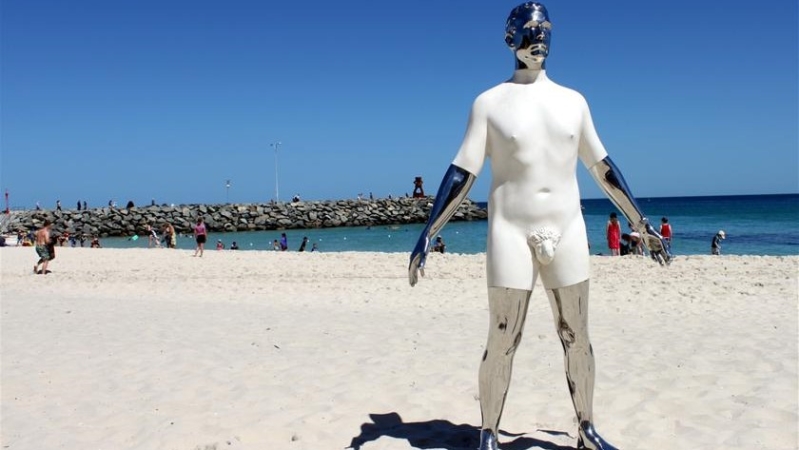
Torso is a life-size human figure derived from a body cast of one of the artists. The outer parts of Torso are made from mirror-polished stainless steel, while the central section is made from a resin-bonded composite that consists of 75% powdered white marble. The effect of the figure so rendered is that the trunk and extremities are separated visually, while remaining physically contiguous. The central torso makes reference to archaeological remnants of heroic figures from Greek antiquity. The marble used as the material for this part of the work also plays to this classical reference. The outer parts of the figure are encased in 'gloves' of reflective metal that evoke the hi-tech / sci-fi 'chrome' signifier. Collaboration with Rickie Kuhaupt. Finalist, Helen Lempriere Sculpture Prize.


Quadrascope


2001, 230 x 110 x 110 cm, Plasma Displays, Computer Hardware and Software

Quadrascope is an omidirectional interface device that displays a large-scale animated version of Chromeskin on each side of a telephone box-sized rectangular prism. The device displays images derived from the Chromeskin laserscan data, processed against the current visual field around it. Observers are able to walk up to and around Quadrascope and approach its surfaces closely. On each face a representation of mirror surfaced Chromeskin is displayed, with the figure reflecting and reacting to the movements of the viewer in realtime. The device is a kind of 'fishtank' giving the impression of a chrome body floating within a rectangular volume. The machine uses four networked computers, four video cameras, and four 130cm plasma flat panel displays. Quadrascope is driven by synchronised 3-D rendering software written especially for the artists by headus (metamorphosis).

Quadrascope forms part of the Chromeskin project. Quadrascope was created in collaboration with Richie Kuhaupt. Finalist and Highly Commended Award, National Sculpture Prize, National Gallery of Australia 2001.


Emission

2001, 120 x 140 x 100 cm, Cast and Fabricated Aluminium, Auto Lacquer
Emission is an exported cyberterritorian (item/being/process). Here crystallised is the cyborg intermarriage of amorphous, sticky, organic potentials, wetly embracing the rigour of regularly expressed delineated systems. Emission is a denizen of the digital realm that has been swept from its native virtual context into the world of mundane tangibility and deposited here on the shores of our reality.


Erasorhead
Maria
1997, 90 x 90 cm, Oil and Auto Lacquer on Stainless Steel
Maria was the robot/girl heroine of the 1910 Fritz Lang film masterpiece "Metropolis".
     
Chromeskin

2001, 185 x 120 x 40 cm, Electroformed Copper, Chromium, Fibregless
Chromeskin is the result of a three year collaborative project between Geoffrey Drake-Brockman and Richie Kuhaupt. Chromeskin was a finalist in the 2001 inaugural National Sculpture Prize and Exhibition, and was on exhibition at the National Gallery of Australia in Canberra from November 30 2001 to March 10 2002. The work was awarded Highly Commended, by the National Sculpture Prize judges.


Neural Network

2003, 60 x 120 x 20 cm, Electroformed Copper, Chromium, Fibregless

Neural Network consists of 18 nodes, regularly distributed over a mirror-reflective matrix-form. As the viewer changes orientation the nodes appear to intermittently make and break connections with adjacent nodes. Chrome surface produced by electrofoming over fibreglass. Winner, Princess Margaret Search for Genius Award.


Geoffrey

2001, Dimensions Variable, Acrylic Paint, Fibreglass Figure, Laser

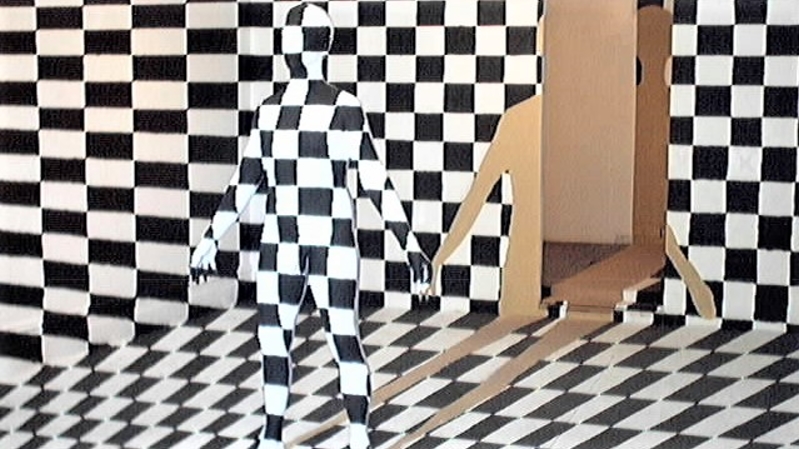
The key process of the Geoffrey artwork is a single-point ocular gridding of the installation space. An ideal perceptual checkerboard that is suggestive of networked and delineating technologies, as well as linear and ordered mental systems. Of course, the act of observation always influences the observed phenomena, but in the case of Geoffrey a transient act of observation has been crystallised as an observable system in itself.

In a sense, Geoffrey depicts a sensorium, an inner space or Cartesian theatre where mental processes are played out. In here, Geoffrey is both actor and audience, caught in the cycle of his own awareness. Geoffrey: information technologist, man-who-would-be-robot, logician. Under the perfect ordering principle Geoffrey is rendered monodimentional. Outside the system there are glimpses of another Geoffrey: fat man, artist, person.

Geoffrey was created in collaboration with Richie Kuhaupt.


Pangenesis
Jacobs Ladder
2002,2000

Pangenesis is a theory of inheritance where genetic information is derived from all parts of an organism. Pangenesis has been discredited in the organic context, but may be a viable schema for reproduction of virtual lifeforms. In this work a virtual being has just reproduced via fission - producing three new offspring. Under pangenesis each offspring has a complete genetic record.

Jacobs Ladder is the ladder leading to heaven as seen by Jacob in his dream; alternatively, it is a device for generating a series of high voltage plasma arcs that ascend between twin diverging conductors before dissipating into the atmosphere.


Lasercube

2002, Dimensions Variable, Lasers
Lasercube Richie in Kings Park
Lasercube Skadada Dancers

Lasercube is a programme exploring the application of planar beams of laser light to describe surfaces, objects and landscapes. The core Lasercube technology involves 60 industrial lasers with hemicylindrical lenses. These are mounted on armatures arranged along the x, y, and z spatial axes. The project encompasses the capture of laser effects via video and still photography and the digital manipulation and presentation of these images. The project crosses boundaries between photography, dance, video, performance, and installation artforms. Lasercube is a collaboration between Drake-Brockman and Kuhaupt and, in its dance/performance realisation, the Skadada performance troupe.

Laser beams are coherent, absolute agents that will be used in this project to introduce gridding and dividing systems applied to realworld objects. This will be done in order to conveniently reduce the object under investigation to its bare spatial necessity. Lasercube is a collaborative project with Richie Kuhaupt. One image shown is of a performance piece (Lasercube II) developed in collaboration with Skadada, dancers; Jon Burtt and Lucy Taylor.


Phasespace Tunneller

1997
Phasespace is a mathematical abstraction - an infinite-dimensional space in which each point fully specifies the total spacetime of an alternate universe. Phasespace encompasses all possible universes - by extrapolation, phasespace hints at the potential embryonic in 'cyberspace'.


Memebot Cluster   1999
A 'meme' is an idea or behaviour that exhibits some 'lifelike' characteristics as it is adopted by groups and individuals. Memes may spread throughout populations osmotically, mutate, flourish, or dissipate. They are generally independent of individual 'carriers' and may be likened to (computer) viruses that 'run' in a human consciousness 'virtual machine'. 'Bot' is a contraction of 'robot' denoting a software system with a degree of autonomy that undertakes a particular task or manages a specific issue. A cluster is generally a collection of like things, a 'bunch' - but in systems terms is a closely interlinked group of processors that effectively become a single aggregate machine - in some ways 'greater than the sum of its parts'.
     

Geoffrey has been exhibiting since 1986. Much of his recent work has been sculptural and installation based and has incorporated the use of robotics and lasers. Geoffrey Drake-Brockman was born in Woomera, South Australia in 1964. In 1985 he completed a BSc in Computer Science at the University of Western Australia. In 1994 he finshed an MA (Visual Arts) at Curtin University. Moving images here.

Contact: